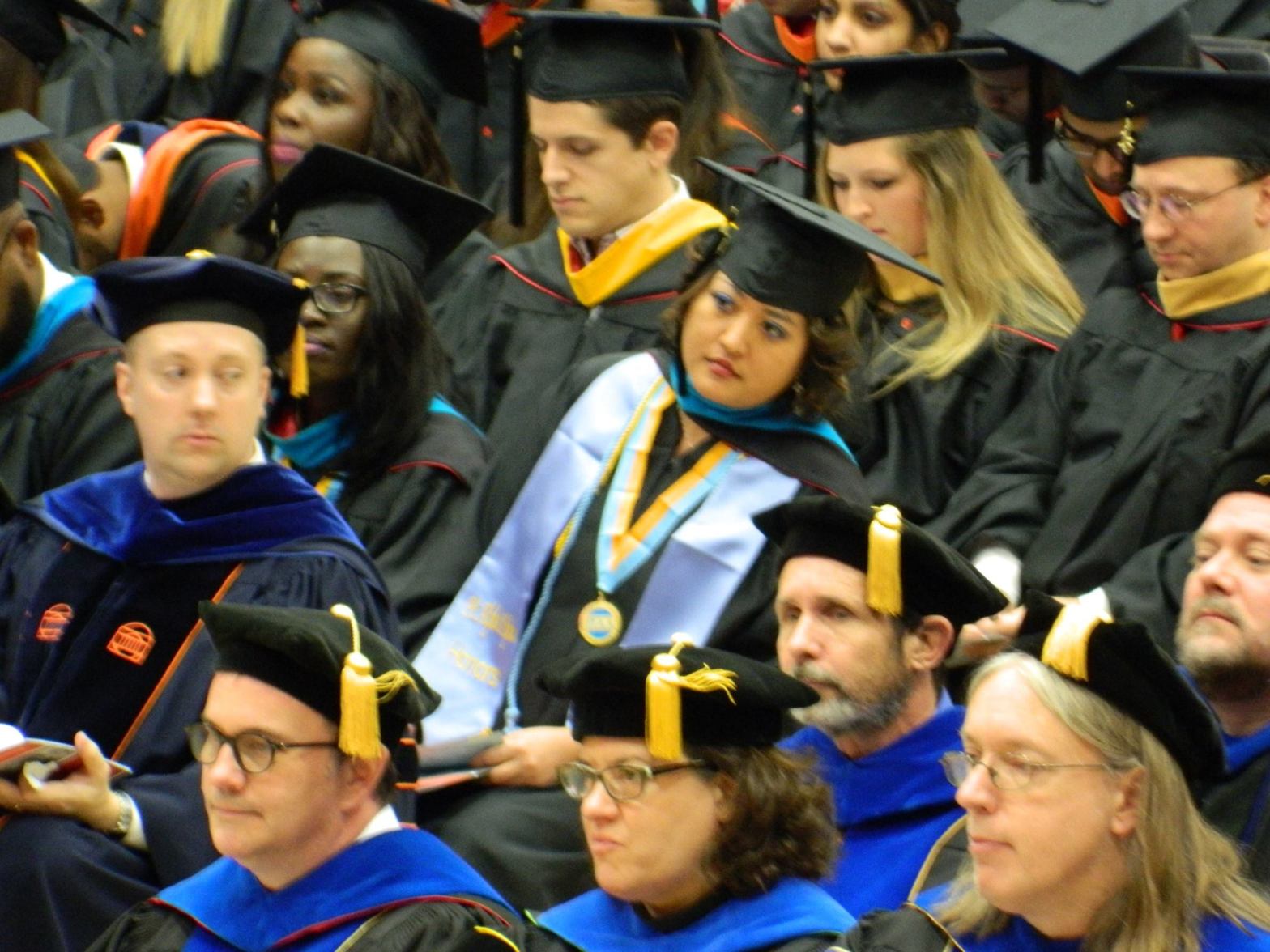
Returning to school can be an exciting time for many. For some, it can present its challenges.
As a graduate school student at Southern Illinois University Edwardsville (SIUE), I entered campus in 2013 with a schizoaffective disorder with OCD diagnosis. I had been stable for many years on medications, and didn’t think I needed to register with the university’s Disability Support Services (DSS) at that time, but that changed.
A year later, I weaned off the last bit of medications I was taking aiming to be less lethargic and not have so many side symptoms. Off the medications, I felt alive and well for a while, but things turned for the worse within a few months where I flunked two papers for a public policy personnel course. I became manic, out of touch with reality, and didn’t sleep for days. I needed to postpone taking the final exam because I knew I would flunk it with the way my brain was malfunctioning.
I went to my professor’s office the day of the exam and cried saying I wasn’t in any condition to take the exam. I told her that when I sat at the computer on campus to study, I felt “anguished.” She called in the public policy department chair, and with documents I submitted from my employer that required me to see a doctor before returning to work (because I failed my job for 2 weeks), they agreed to excuse me from taking the exam at that time.
I had to report to DSS to register my status as being disabled and for them to accommodate me. I was soon hospitalized in St. Louis at Mercy hospital for seven days and took medications again. I coordinated with DSS to postpone my exam. Three weeks later out of the hospital, I took my final exam at the DSS center needing to score a 100% to salvage my getting an A in the class. I was not well, but exerted myself well enough to score the 100%.
DSS’s accommodation was excellent. The center’s staff also matched me with a mentor who played a hugely incredible role in my life. I graduated with a 4.0, I got married, and I’m a mother of twin girls. I continue to express my gratitude for my successes by sharing my story, and NAMI St. Louis has enabled that for me through blog writing, and my public speaking engagements, In Our Own Voice presentations.
I’m writing a book with 3-time Emmy Award winning former reporter Art Holliday called, “My Brain Makes Me Proud: How I Beat Schizoaffective Disorder.” I experienced several higher education scenarios where I needed help, compassion and advocacy. My book especially details my growth and development as a Notre Dame student as well as how I was first diagnosed as a sophomore with mental illness. Higher education has become more accommodating for individuals like me throughout the years, and I hope you or your loved one can tap into these resources and find support likewise.
Theresa San Luis Teller can be reached at tsanluisnd@gmail.com
 My Brain Makes Me Proud